
The Future of AI in Aesthetics
- Jun 30
- 4 min read

Aesthetic decisions are rarely simple. They involve your appearance, confidence, and expectations, and often come down to one key question:
What will this actually look like on me?
That’s why AI is becoming so important in aesthetics. People want more than vague promises or generic before-and-after photos. They want clarity before they commit.
AI is helping shift aesthetics toward a more visual and personalized experience.
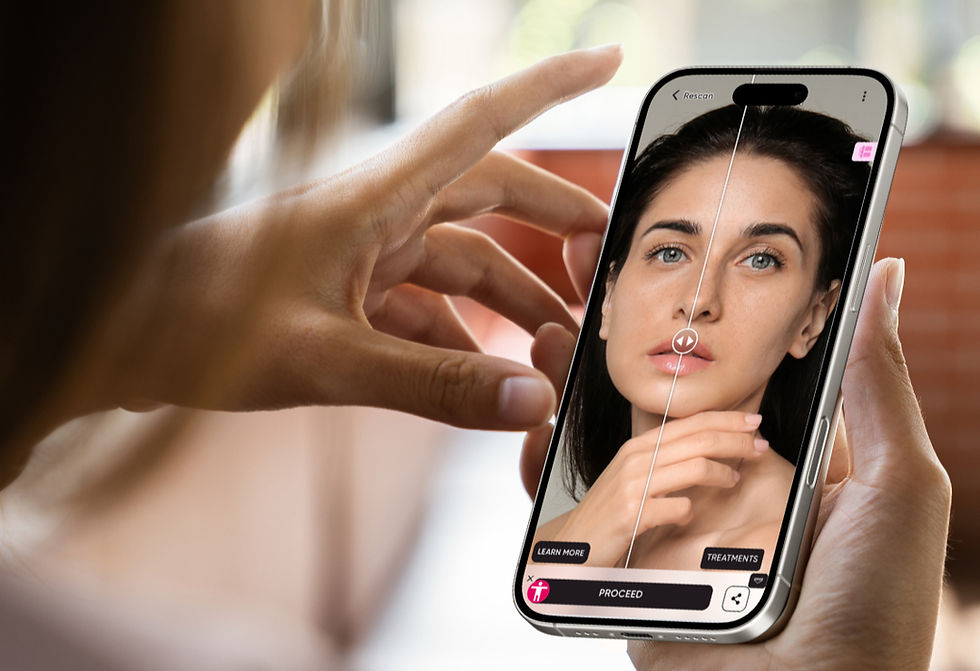
With AI-powered simulators for facial aesthetics, weight loss, breast enhancement, and skin analysis, eMI helps users explore possible outcomes before booking a consultation. The goal isn’t to replace providers, but to help people start their journey with more confidence and clearer expectations.
AI in Aesthetics
From generic advice to personalized planning
One of the biggest changes AI brings to aesthetics is the move away from one-size-fits-all beauty advice.
In aesthetics, small differences matter. Facial structure, skin texture, body proportions, aging patterns, muscle movement, weight distribution, and personal preference can completely change what makes sense for one person compared to another. That is why generic before-and-after photos only go so far.
Someone exploring facial treatments may not know whether they are bothered by lines, volume loss, skin laxity, facial tiredness, or overall balance. Someone considering breast augmentation may not know whether they want more size, better symmetry, restored volume, or a more proportionate shape. Someone thinking about weight loss may know they want to change their body, but not what that change could realistically look like.
The AI Simulators help make this early stage more personal.
The AI Facial Simulator helps users explore how subtle aesthetic changes may look on their own face, whether they are curious about looking less tired, smoothing lines, improving balance, or creating a more refreshed appearance.
The AI Breast Simulator helps users visualize possible breast augmentation results on their own body, making it easier to think beyond cup size and focus on proportion, fullness, and shape.

The AI Weight Loss Simulator helps users preview possible body changes, giving them a more visual understanding of their goals before or during a weight loss journey.

Together, these tools help users move from vague curiosity to clearer direction.
AI can help people understand what they want before they know how to ask for it
Many people know something bothers them, but they do not always know what to call it. They may not know whether they need Botox, filler, skin treatments, weight loss support, breast augmentation, or something else entirely. They may only know how they feel when they look in the mirror:
“I look tired.”
“My skin looks older.”
“My body does not feel like me anymore.”
“I want more balance.”
“I want to look better, but still natural.”
The AI Simulators help translate those feelings into something more visual. Instead of needing the correct treatment vocabulary, users can start by seeing what different directions may look like for them.
That makes the next step less intimidating.
A user who sees a facial simulation may realize they are drawn to a softer, more rested look rather than a dramatic change. Someone using the AI Breast Simulator may realize they want subtle proportion rather than a larger size. Someone using the AI Weight Loss Simulator may realize that body shape and visual progress matter more to them than a number on the scale.
AI helps users understand their own goals before they walk into a consultation.
Better visualization can improve consultations
Aesthetic consultations are often where excitement and uncertainty meet.
Patients want possibility, but they also want honesty. Providers want to educate, but they also need to understand what the patient is really hoping for. That can be difficult when someone arrives with only a vague concern or a reference photo of someone with completely different features. AI can improve that conversation by creating a clearer starting point.
With eMI, users can begin the process before ever stepping into a clinic. They can upload an image, explore possible simulations, assess visible skin concerns, or compare aesthetic directions from home. By the time they connect with a provider, they are not starting from zero. AI does not replace the provider. It helps make the conversation better.

The next expectation: control without pressure
The broader consumer trend is clear – People want more control before commitment. They want to explore privately, compare options, take their time, and move forward only when the decision feels right. In aesthetics, that expectation is especially important because the results are personal and visible.
AI supports that shift by making early-stage exploration more approachable.
With eMI, users can explore possible facial aesthetic results from home. They can visualize potential breast augmentation outcomes before trying to explain their goals in a consultation. They can preview weight loss changes before or during a transformation journey. They can better understand visible skin concerns before deciding what kind of support they may need.
For some users, that clarity reduces hesitation. For others, it helps them realize they are not ready yet. Both outcomes are valuable.
The future of AI in aesthetics is not about pushing people into treatment. It is about giving people better tools to decide for themselves.
AI is changing aesthetics because it addresses one of the biggest emotional barriers in the industry: uncertainty. People do not only want treatment information. They want to understand how a possible result may look on them. They want to feel prepared before they book. They want to compare options without pressure. They want to have better conversations with providers. They want to make decisions that still feel right after the excitement fades.
That is the future eMI is helping build.
A future where aesthetic decisions begin with the individual, not a generic before-and-after photo. A future where users can see possibilities before they commit. A future where AI supports confidence, not pressure.
As AI continues to shape aesthetics, the brands and providers that stand out will be the ones that make the journey feel more honest, more visual, and more personal. Because when people can see what may be possible for their own face or body, confidence stops being a marketing promise. It becomes part of the experience.


Comments